

Our 10-Day Peru Itinerary: Machu Picchu, the Sacred Valley and Beyond
In November 2026 we spent ten days in Peru, testing the hotels, guides and experiences we plan into our clients’ trips. We travelled with our local partner in Peru, from the Sacred Valley to Machu Picchu, Cusco, a rainbow mountain at around 4,900 metres, Lima and the desert coast at Paracas. We came home with full notebooks, tired legs and a long list of places we can’t wait to share. Here’s our Peru itinerary day by day: what we did, what we’d book again, and what we’d plan differently.
Written by Holly and Grace, sales and operations at Travel Differently
Last updated 17th October 2026
Our 10-day Peru route at a glance
We arrived a day apart and split up on some days to see more, so a few stops below were seen by one of us only. For more ideas across the country, see our guide to things to do in Peru.
| Day | Where | What we did |
| 1 | Sacred Valley (Urubamba) | Flew into Cusco; 1.5-hour drive down to the valley; Inkaterra Hacienda Urubamba and Sol y Luna |
| 2 | Sacred Valley | Maras salt pans, Moray terraces and lunch with the Misminay community |
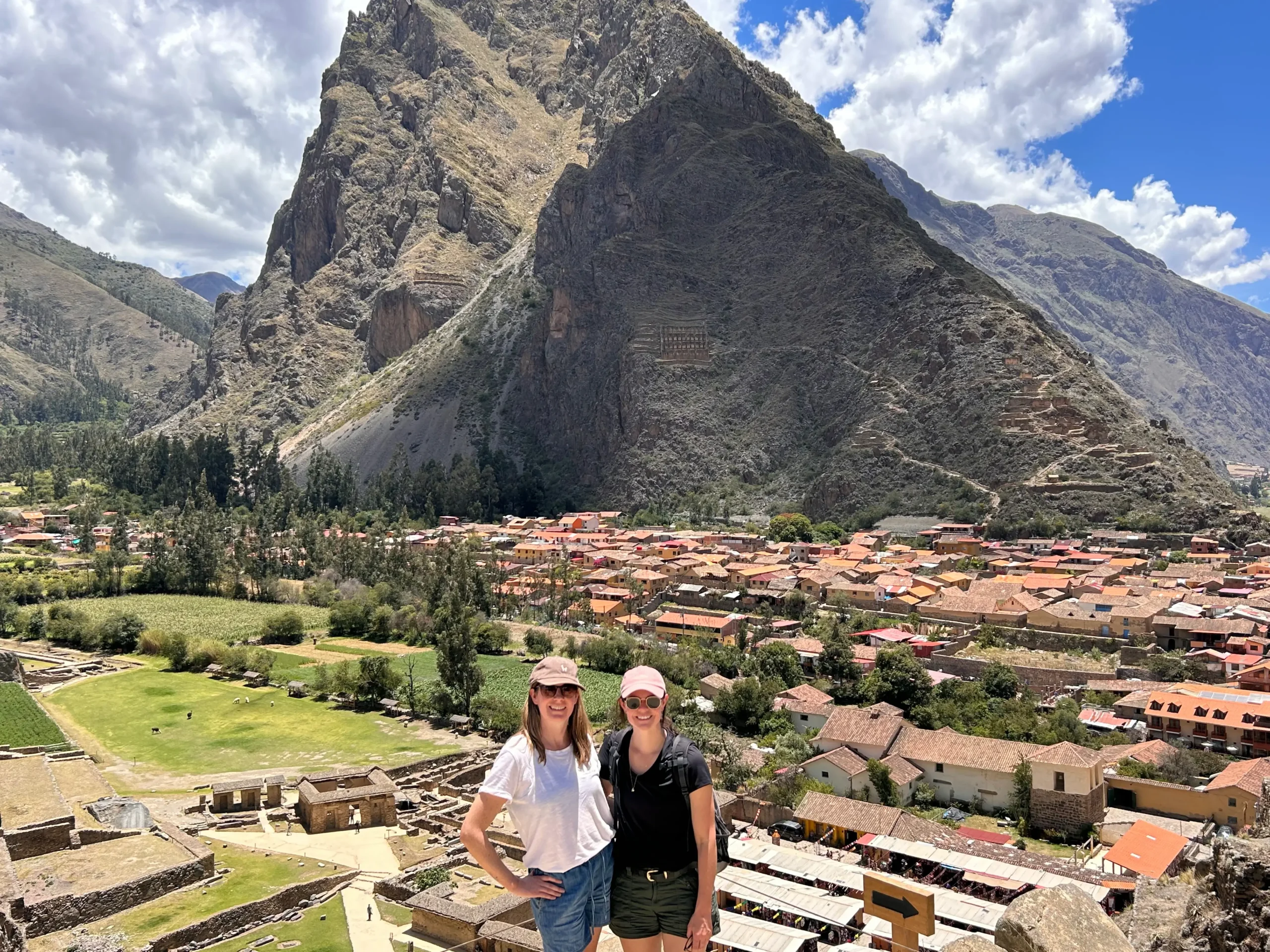
| 3 | Ollantaytambo | Pachar Pueblo Mural project, Ollantaytambo ruins, lunch at Casa Museo ALQA, chicha tasting |
| 4 | Machu Picchu | Vistadome train, circuit 1B, night back in Ollantaytambo |
| 5 | Cusco | Market and cooking class with Mamá Seledonia; San Blas music and art walk |
| 6 | Palccoyo | The quieter rainbow mountain; Nikkei dinner at Limo |
| 7 | Lima | Food walk, Hotel B in Barranco, pisco cocktail class |
| 8 | Ica and Paracas | Coach south from Lima, two pisco and wine bodegas |
| 9 | Paracas | Ballestas Islands and the Paracas National Reserve |
| 10 | Lima | Huaca Pucllana and the Amano Textile Museum |
How to visit Machu Picchu: what we learned
Getting to Machu Picchu by train from Ollantaytambo
We were dropped at Ollantaytambo station at 8.30am, left our main luggage safely at our hotel next to the train station, and took the 9.15am Vistadome train. The ride takes about an hour and a half along the Urubamba river to Aguas Calientes, then a bus climbs to the entrance in around 30 minutes. Trains allow one bag of up to 8kg per person, so pack a small day or overnight bag.
Lunch at the Belmond Sanctuary Lodge
We had the delicious buffet lunch at the Belmond Sanctuary Lodge, right beside the entrance, before our 1pm entry. It’s the only hotel at the top, and eating there meant we started the visit fed and unhurried. The food and drinks were varied and really worth the more expensive price tag than some more modest eateries down in the town.
Which Machu Picchu circuit to choose
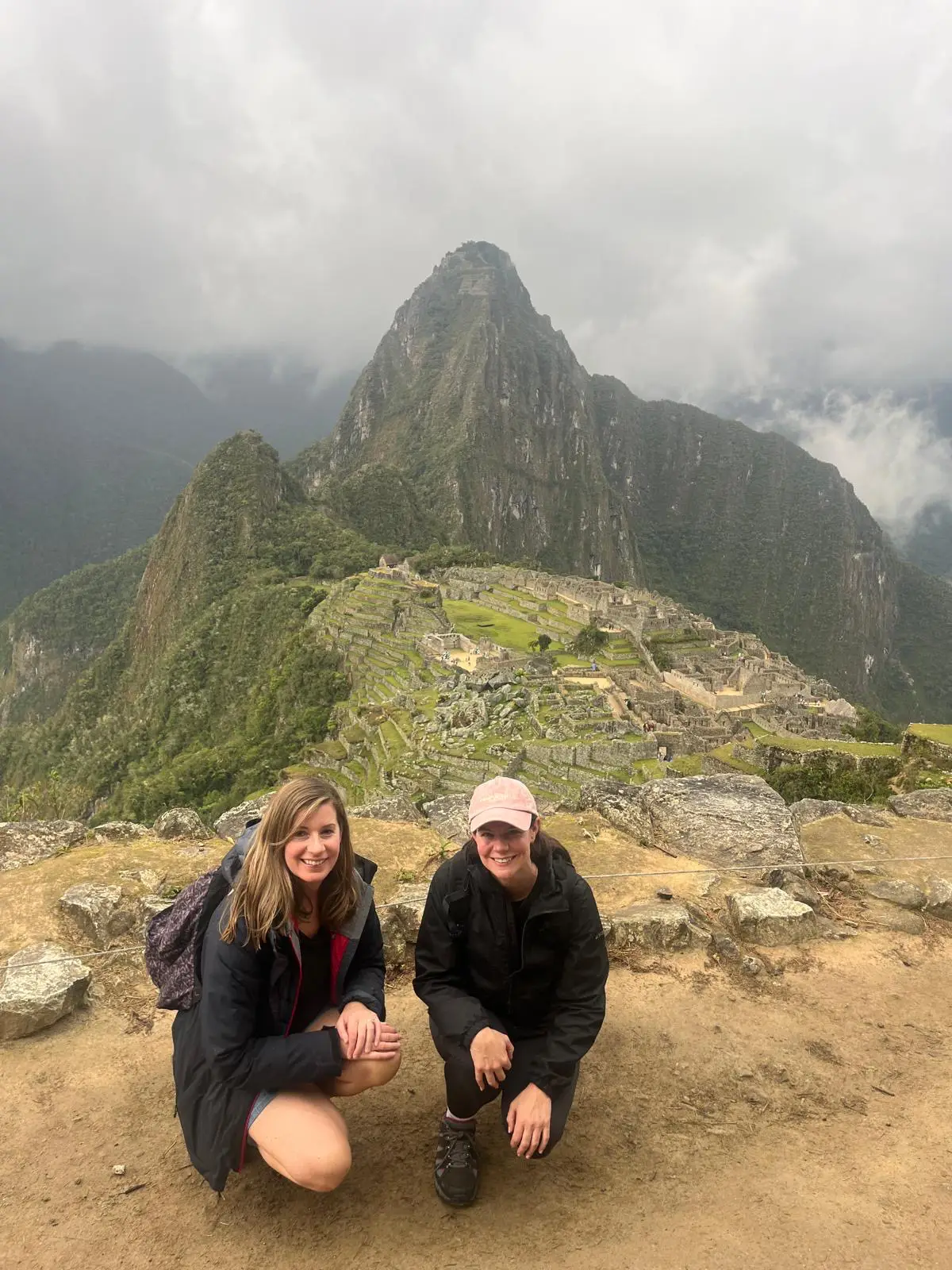
Machu Picchu tickets are now sold by circuit and route, and you must stick to the one you book. We walked route 1B, the Upper Terrace, with our guide Wagner. Even under cloud, that first sight of the citadel below is every bit as special as you’d hope. It climbs to the Guardian’s House for the classic view over the citadel, but circuit 1 stays on the upper terraces and doesn’t go down among the temples. If walking through the ruins matters more than the view, ask us about circuit 2B; if you want both, it’s possible to book two tickets.
Machu Picchu in the rainy season
November is the start of the rainy season. Our afternoon began cloudy, we got our photos, and then the heavens opened and we were thoroughly soaked! Wagner’s history of the site kept us absorbed throughout, but take a proper waterproof and shoes with grip, whatever the forecast.
Where to stay near Machu Picchu
We went back down the valley to sleep in Ollantaytambo rather than Aguas Calientes. El Albergue is a charming, characterful hotel right on the station platform: perfect for an early train, though you’ll hear the trains. Tierra Viva, a short walk up the road, is quieter, with bigger grounds and a larger lounge and bar; it’s popular with groups, so it suits travellers who want straightforward comfort.
Our Machu Picchu tips
- Book your circuit and entry time early through Travel Differently: the ticket you hold decides what you see.
- Pack for rain from November to March, and for strong sun at any time of year.
- Stay in the Sacred Valley first: it’s lower than Cusco, so it’s an easier place to adjust to the altitude.
- Allow a full day: it was 6pm before we were back in Ollantaytambo.
The Sacred Valley: salt pans, ruins and community projects
Maras, Moray and the Misminay community
The Maras salt pans are thousands of small pools stepped down a hillside, fed by a natural saltwater spring and still worked by local families, as they were before the Incas. Nearby Moray’s circular terraces are thought to have been an Inca agricultural testing ground. Both were busy with visitors, so we’d plan an early start. Then came a real treat, lunch with the Misminay community: a welcome in traditional dress, dancing, demonstrations of farming tools and a home-cooked meal of quinoa soup and chicken with rice.
The Pachar Pueblo Mural project
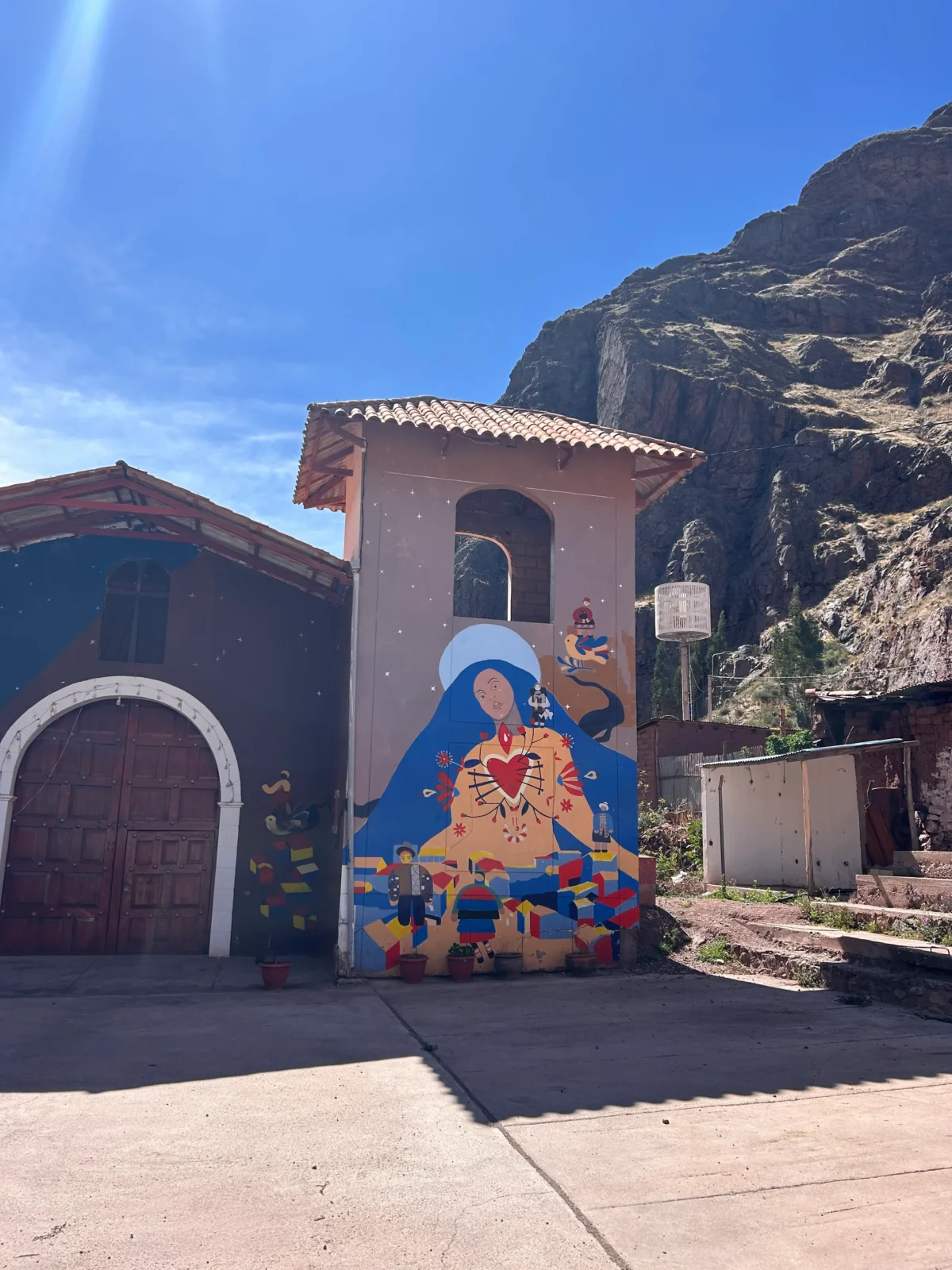
Between Urubamba and Ollantaytambo, this community initiative supports local women through murals painted across the town, each telling a story about farming, Andean beliefs or local traditions. We followed the murals on foot, then picked up a brush ourselves near the local school. A short, inspiring visit that gives a real insight into the valley and supports the people who live there. A visit that stayed with us. We donate to the LATA Foundation every month, which supports this project, so it was wonderful to see it in action.
Ollantaytambo ruins and town
We spent about an hour in the ruins with our guide, Dennis, on a bright, sunny day. The terraces climb the mountainside above a town that still follows its original Inca street plan. Lunch was a three-course tasting menu in the garden of Casa Museo ALQA, a gallery of Andean art: delicious, but it took two hours, so we’d plan the afternoon around it.
Tasting chicha
We were due to learn how chicha, the Andes’ fermented corn drink, is made, but our host was unwell, so we tasted it in a local chichería instead. We’d still include it, ideally with the making demonstration.
Palccoyo: the quieter rainbow mountain
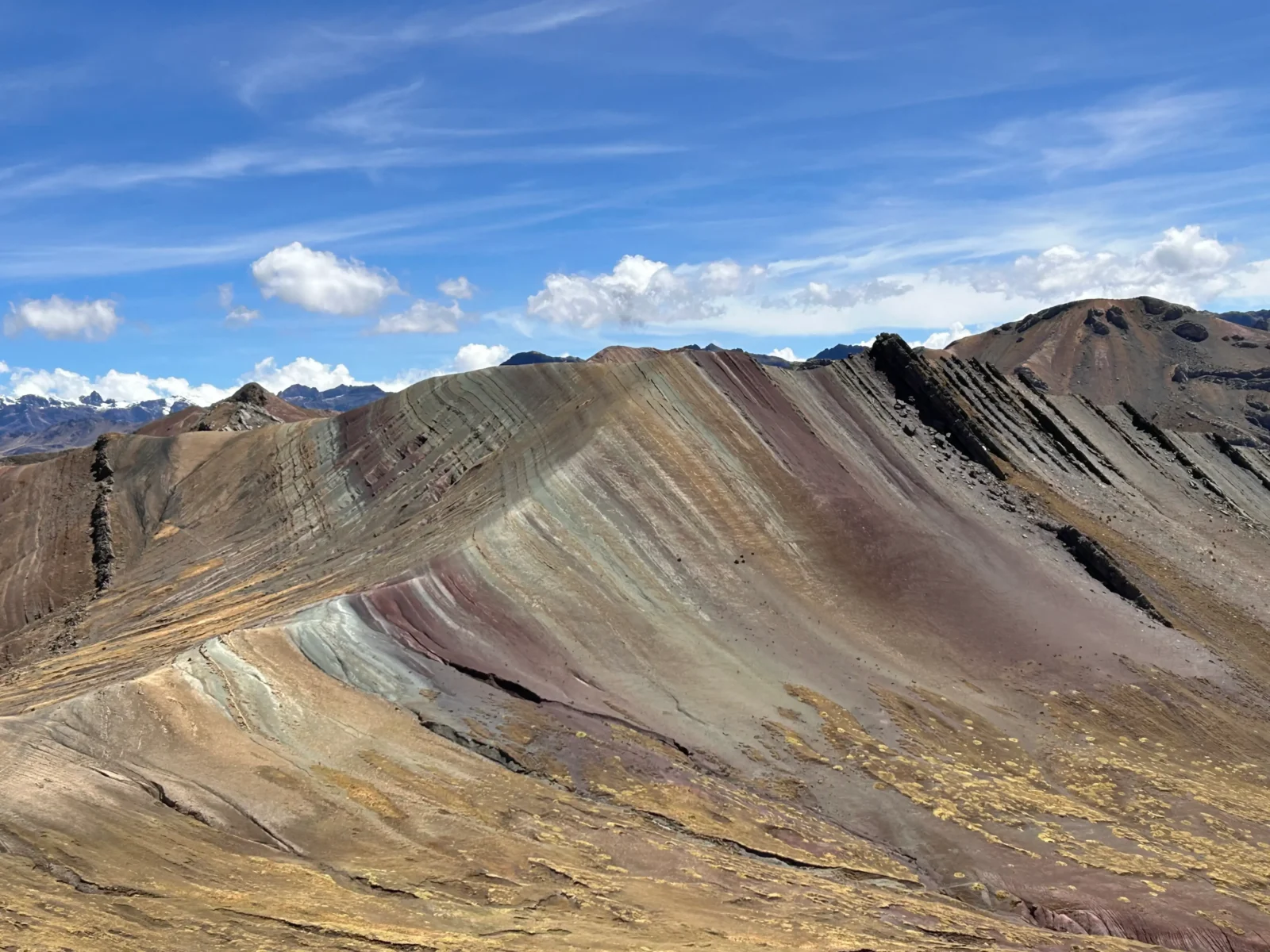
If one day surprised us, it was this one and we’re still talking about it. Palccoyo (also spelt Palcoyo) is a range of striped red, ochre and green mountains south-east of Cusco: a real alternative to the famous Vinicunca Rainbow Mountain.
Getting to Palccoyo
We were picked up at 4.50am for a drive of around three hours, with breakfast halfway at a purpose-built restaurant with big windows, timber, clean toilets and mountain views. The last 30 minutes is a steep, very bumpy track. We were among the first to arrive and saw only 15 to 20 other visitors all morning.
The Palccoyo hike and altitude
It took about two hours in total, with an hour up to the main viewpoint at roughly 4,900 metres, past a stone forest and views of snow-capped Ausangate. Go slowly, drink water and take breaks: our guide carried oxygen, though we didn’t need it. It had rained the day before, which locals told us brings out the colours, and the sky was a clear, deep blue.
What to pack for Palccoyo
Layers, a warm jacket, hat, sunglasses and plenty of sun cream: the sun is fierce at this altitude, even when the air is cold. Our guide to hiking in Peru has more on preparing for the altitude.
Is Palccoyo worth it?
An early start and a long drive, but the scenery and the quiet made it a real highlight of our trip, and the day we’re most excited to share with you. Lunch back at the same restaurant was a surprise: thoughtful Peruvian cooking, far better than a standard tour buffet. One tip: on Saturdays a large market on the edge of Cusco jams the roads in the afternoon, so set off early and aim to be back by 2pm, as we were.
Cusco: music, markets and a cooking class with purpose
Cooking class with Mamá Seledonia
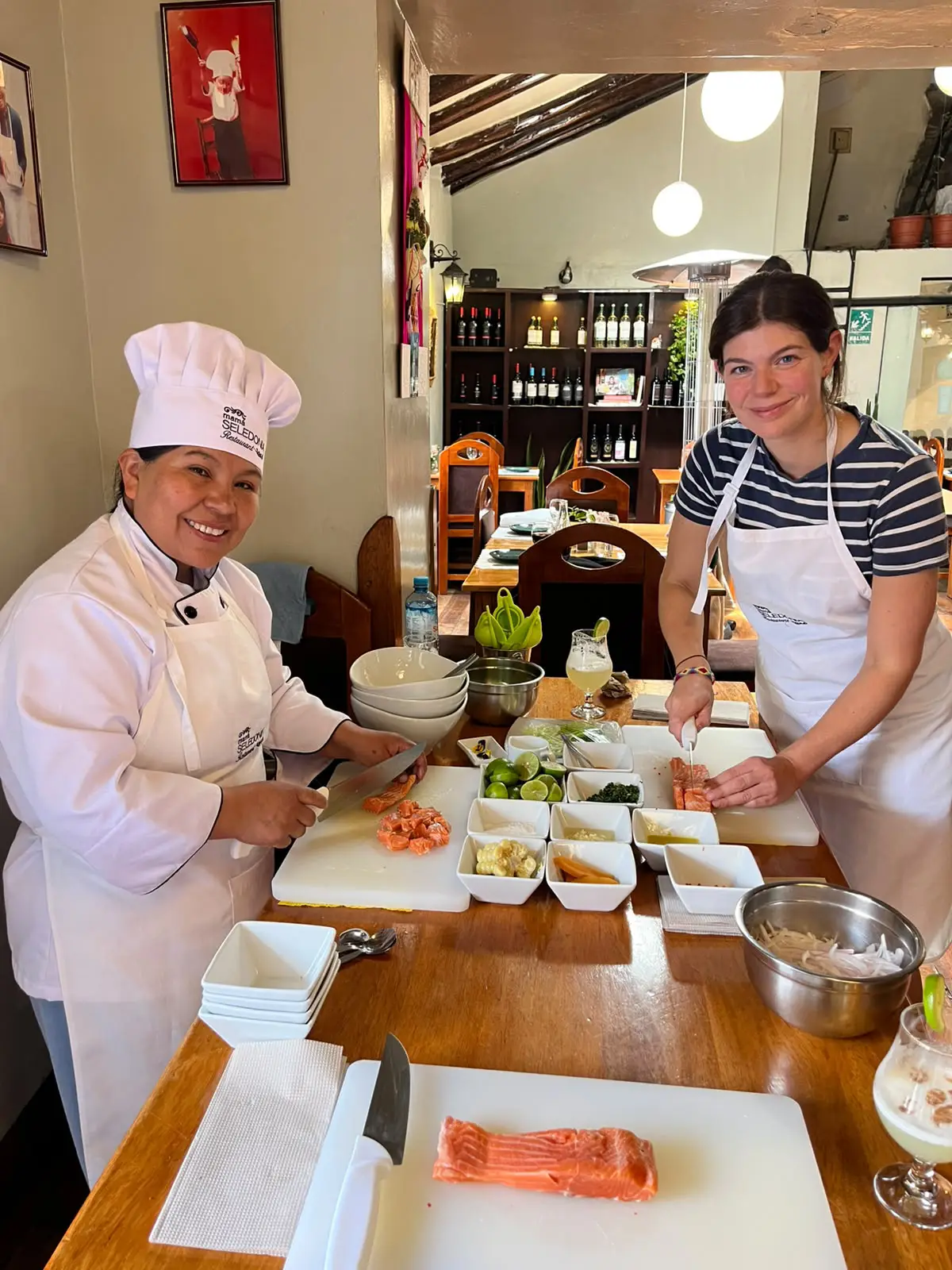
We met Seledonia Montalvo at a local market (San Pedro was closed for cleaning that day), where she chose ingredients while Dennis explained them. In her small upstairs restaurant we made pisco sours (one of the best of the trip), trout ceviche with sweet potato and corn, and ají de gallina, a creamy chilli chicken. Seledonia speaks Spanish, and Dennis translated as she sat down to eat with us. Her business provides work for single mothers, and she told us how she invites families from poorer communities, including Indigenous communities, to eat at her restaurant and cooks for older people at Christmas. A cooking class that’s about far more than the food with a host you won’t forget.
San Blas walking tour and instrument workshop
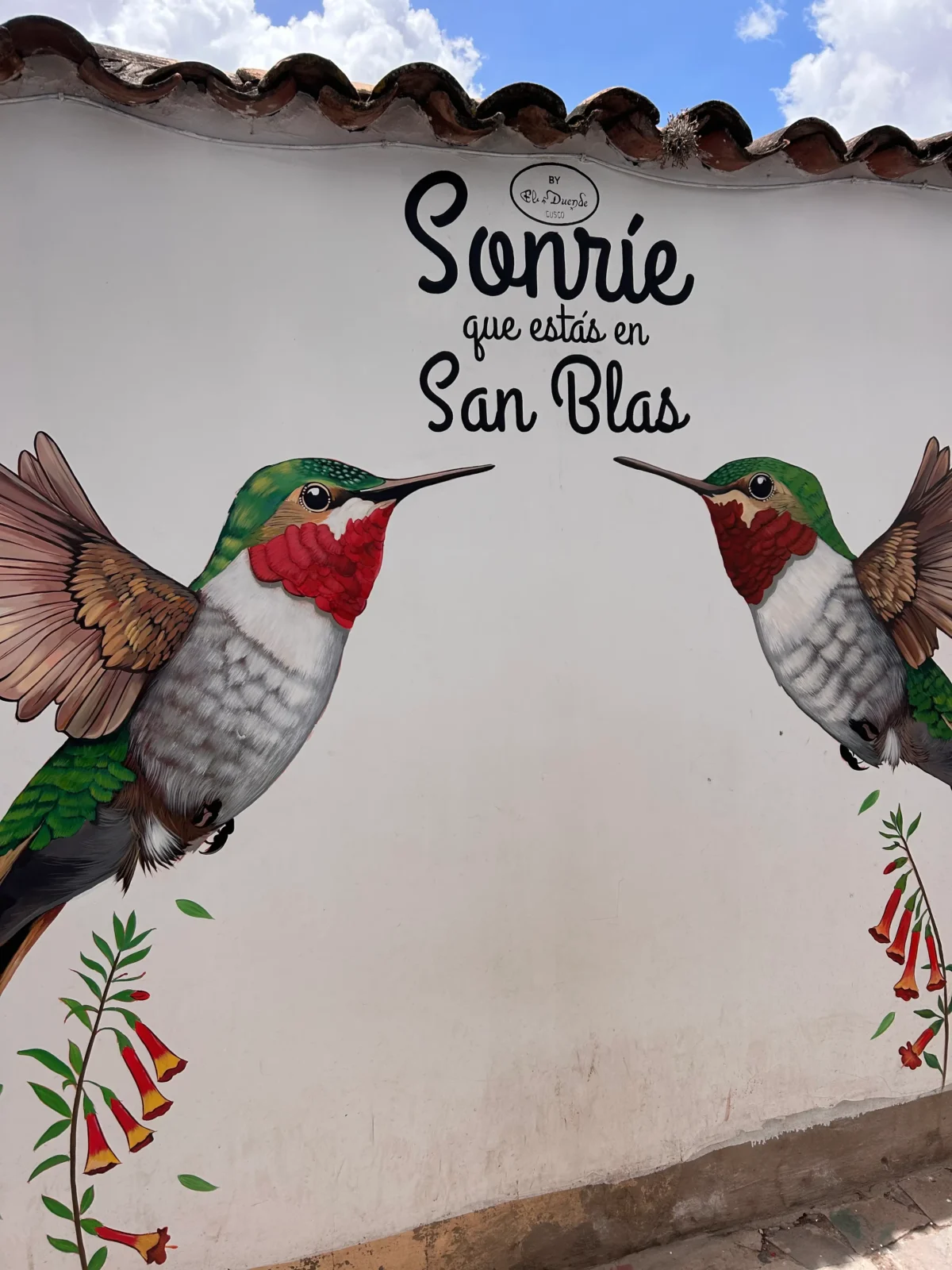
Our local guide, Ernesto, led a two-hour walk through the artists’ quarter of San Blas, focused on the music, art and everyday life of the city rather than the main monuments. At master instrument-maker Sabino Huamán’s family workshop we learned how Andean instruments are made and played, and had a go at making a traditional flute ourselves. We also visited the Mendívil family’s workshop museum, known for its long-necked religious figures, and finished at viewpoints over the city.
Where to eat in Cusco
Lunch at Antigua Casona San Blas was one of the best meals of the trip. For a fancy dinner with views, Limo, overlooking the Plaza de Armas, serves Nikkei food (Peruvian-Japanese): several courses and cocktails for two came to about £100. Walking back across the square, we found students in school uniform playing guitars and ukuleles to a crowd of dancing locals; leave some free evenings for moments like this.
Lima: Barranco, street food and pre-Inca history
An hour’s flight from Cusco, Lima felt like another country: warm, humid and right on the Pacific. It’s also the capital of Peru’s food scene.
A Lima food walk off the tourist trail
Our afternoon gastronomy walk with our local guide took in five or six tiny, hole-in-the-wall restaurants we’d never have found alone, with a tasting and sometimes a cooking demonstration at each, and short walks between so we never felt too full. It ended with gelato. We’re still dreaming about it: one of the highlights of the whole trip!
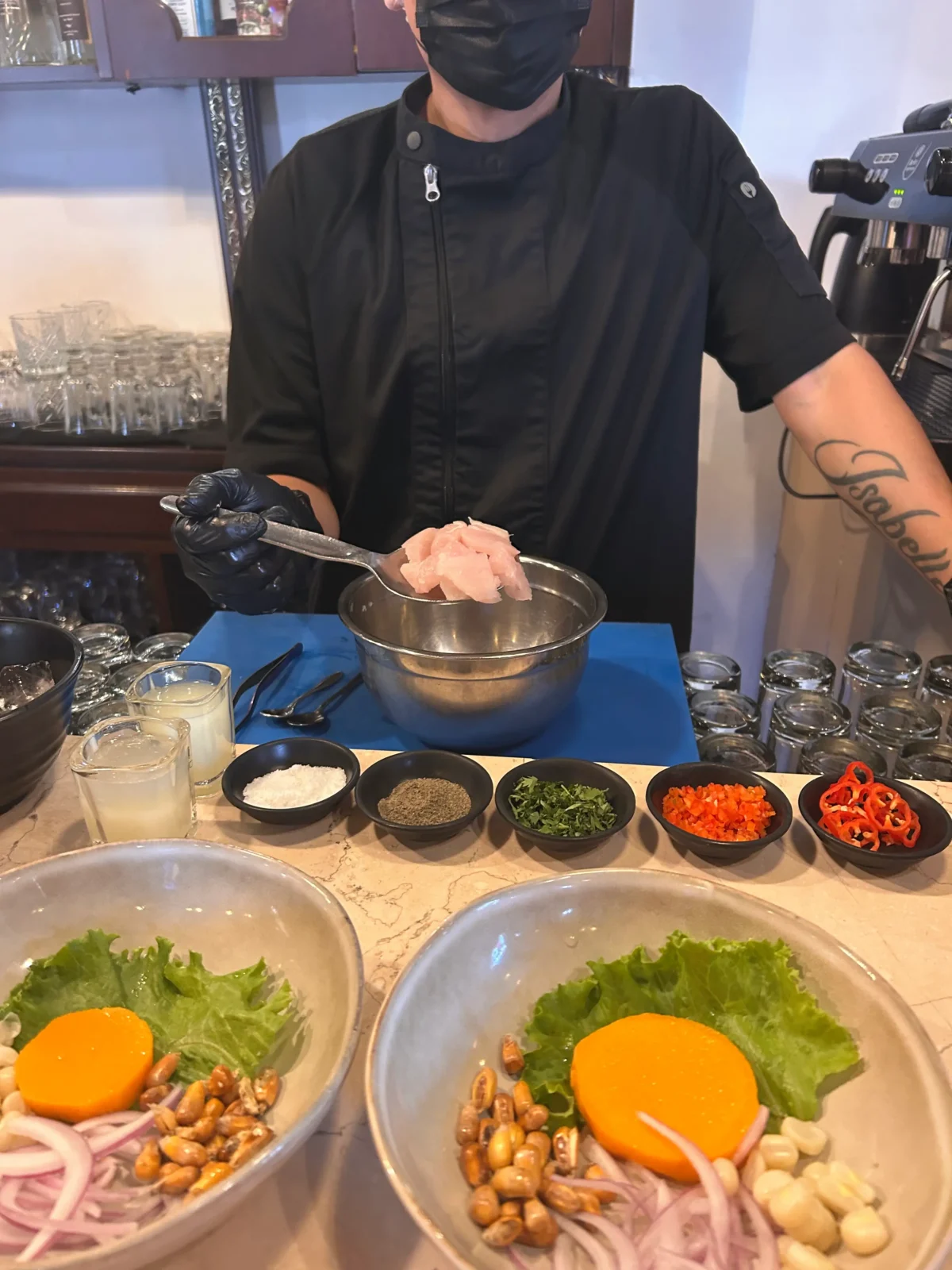
Pisco sour cocktail class
The wonderful Hotel B in Lima hosted a fantastic cocktail making class: a classic pisco sour, then two Peruvian twists on vodka and gin cocktails, each paired with small plates. A perfect way to end a busy day in vibrant Lima.
Huaca Pucllana and the Amano Textile Museum
Huaca Pucllana is a huge adobe pyramid in the middle of Miraflores, built and used by the Lima culture and later the Wari and Ychsma, and still being excavated. Visits are guided only, and there’s one ticket booth, so allow time for the queue as well as the hour on site. The nearby Amano Textile Museum holds an exceptional private collection of pre-Columbian textiles, with colours that still look fresh. Together they make a rewarding half day for anyone interested in history; pair them with a tour of the colonial centre for the wider story of the city.
South to Ica and Paracas
Lima to Ica by coach
Our guide saw us onto a modern double-decker coach in Lima, with reclining seats, footrests and a toilet on board. The five-hour journey to Ica left on time, ran smoothly and was far more comfortable than we expected: an easy overland option, with no airport in sight.
Pisco and wine bodegas near Ica
Near Ica we visited a small family-run bodega, where the owner taught us how to taste and we ate lunch outdoors among local families, then the Picasso family’s Vista Alegre estate (Italian, not Spanish, roots), a handsome hacienda where much of the bottling is still done by hand. Peruvian wines tend to be sweeter, to suit local tastes, so we’d suggest these visits for the culture and the pisco rather than for serious wine lovers.
Paracas and the Ballestas Islands
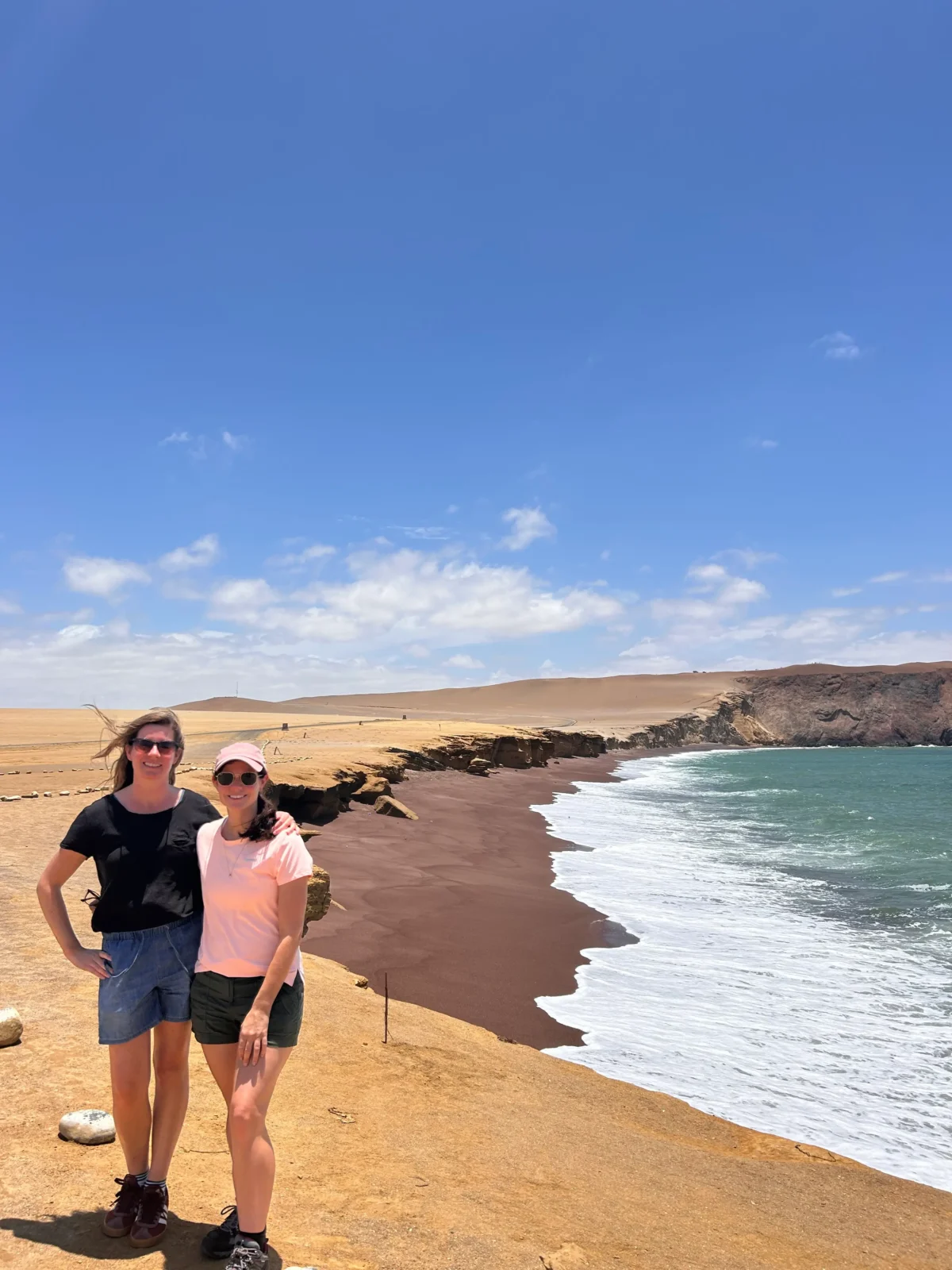
Our hotel, Hacienda La Bahía, has sprawling gardens, several infinity pools and spacious rooms: a good four-star base, a short taxi ride from the small, low-key town. Boats to the Ballestas Islands leave from the hotel’s own jetty. On our visit, warmer seas linked to El Niño had pushed fish away, and we saw only a few sea lions and seabirds, far fewer than usual. It’s a lovely place to slow down at the end of a busy trip, but wildlife numbers may take a while to recover after El Niño, so for now we’d treat the islands as a bonus rather than a highlight.
Turning this into a 2-week Peru itinerary
Ten days covered a lot, but we moved quickly. With two weeks or more, this is what we’d add:
- A slower start in the Sacred Valley. Two or three extra nights lower down make the climb to Cusco and Palccoyo easier, and leave time to enjoy hotels like Inkaterra Hacienda Urubamba and Sol y Luna.
- A night near Machu Picchu. Staying close by lets you use a second ticket the next morning, for example circuit 2B down among the temples after circuit 1’s view from the top.
- A free day in Cusco. Time to wander San Blas, eat well and catch moments like the music in the Plaza de Armas.
- Lake Titicaca. The high plains and lake communities around Puno pair naturally with Cusco; ask us about adding them.
- The Amazon. A short flight from Cusco or Lima takes you to the rainforest around Puerto Maldonado for a few nights of river trips, wildlife and jungle lodges: a completely different side of Peru.
- More time on the coast. Two or three nights in Paracas at the end is a gentle way to finish before flying home from Lima.
Our Classic Highlights of Peru runs 13 days, and Slow Travel: Peru In-Depth takes 21, with the time to do all of this unhurried.
Where we stayed (and what we thought)
Several of these hotels feature in our luxury Peru holiday, and we can build any of them into a trip tailored to you.
| Hotel | Where | Best for |
| Inkaterra Hacienda Urubamba | Urubamba, Sacred Valley | A peaceful retreat: warm, personal service, a spa, afternoon tea and free guided activities such as a twilight nature walk |
| Sol y Luna | Urubamba, Sacred Valley | Five-star and very relaxing after the journey: pool, jacuzzi and two excellent restaurants. Worth the money to upgrade |
| El Albergue | Ollantaytambo station | Early Machu Picchu trains and lots of character. Delicious food, expect some train noise |
| Antigua Casona San Blas | San Blas, Cusco | Boutique character in Cusco’s artists’ quarter, with an exceptional restaurant and spa |
| Quinta San Blas | San Blas, Cusco | Good value and lots of character: a small, traditional three-star hotel around a central courtyard, within walking distance of the Plaza de Armas |
| Hotel B | Barranco, Lima | A beautifully restored heritage building full of art, incredible food (Relais & Châteaux) and cocktails. 5* |
| Villa Barranco | Barranco, Lima | Those who love independent hotels: just 18 rooms in two restored early-20th-century mansions, with a garden and rooftop terrace |
| Hacienda La Bahía | Paracas | Stunning pools, gardens and boat trips from the hotel jetty |
Peru travel FAQs
Circuit 1 (we walked route 1B, the Upper Terrace) gives the classic view from the Guardian’s House but stays on the upper terraces. Circuit 2B takes you down through the temples and houses. Want both? Ask our Peru experts about booking a ticket for each.
Take the train from Ollantaytambo to Aguas Calientes (about an hour and a half), then the bus up to the entrance (about 30 minutes). Trains allow one bag of up to 8kg each.
Yes, for most people. We saw only 15 to 20 other visitors, and the walk to the main viewpoint took about an hour. It still reaches about 4,900 metres, so acclimatise in the Sacred Valley or Cusco first, and expect a 4.50am pick-up and around three hours’ drive each way.
November is the start of the rainy season in the Andes. We had sunny days in the Sacred Valley and at Palccoyo, but rain at Machu Picchu, so pack waterproofs. Lima and the coast were warm and dry.
Yes. We took a comfortable double-decker coach from Lima to Ica in about five hours; Paracas is a short drive on. On the return we took a private transfer which took around 4 hours to the airport in Lima.
We covered the Sacred Valley, Machu Picchu, Cusco, Lima and Paracas in ten busy days. Our tailor-made trips usually run 13 to 21 days, which leaves time to adjust to the altitude and enjoy each place.
May to September is the dry season, with the clearest skies but the most visitors. April and October are a good balance. November to March is the rainy season: greener and quieter, but expect showers, as we found in November. The Inca Trail closes every February for maintenance, though Machu Picchu itself stays open.
Yes. We went by train to Aguas Calientes and took the bus up to the entrance, with no hiking at all. Inside the site there are steps and uneven paths, so tell us about any mobility needs and we’ll suggest the most suitable circuit.
No road goes all the way. From Cusco, it’s about two hours by car to Ollantaytambo, then around an hour and a half by train and 30 minutes by bus: allow four hours or more each way. That’s why we stayed in the Sacred Valley, which is closer and lower, and visited Cusco afterwards.
Plan your Peru trip with us
We loved every minute of tasting, walking and exploring our way around Peru, and everything above is what we use to plan your trip. Start with Classic Highlights of Peru for Machu Picchu, the Sacred Valley and Cusco, or Slow Travel: Peru In-Depth to take it at an unhurried pace. Prefer to see the Andes on foot? Our new Peru walking holiday is built around the trails. Get in touch and we’ll tailor it to you.
Speak to our Peru experts, Sam, Scarlett or Sinead or call +44 (0)203 9099 573, and we’ll help you work out your perfect trip.
Why Book With Travel Differently

Passionate and experienced
- Each member of the team has over a decade of experience in the industry
- Our 5* client reviews reflect our service & standards
- We are a fully independent & owner-run tour operator
- Our holidays include full financial protection & ATOL coverage
- We are destination experts, ensuring authentic & reliable advice

Committed and Responsible

Tailor-made and Personal
- No two trips are the same, our holidays are 100% bespoke
- We design personal, genuine cultural connections & experiences
- From planning to travel, you’ll have one dedicated point of contact
- Our support is available around the clock during your holiday
- We take care of the details, so you don’t have to