
Bhutan vs Nepal: Which Should You Choose?
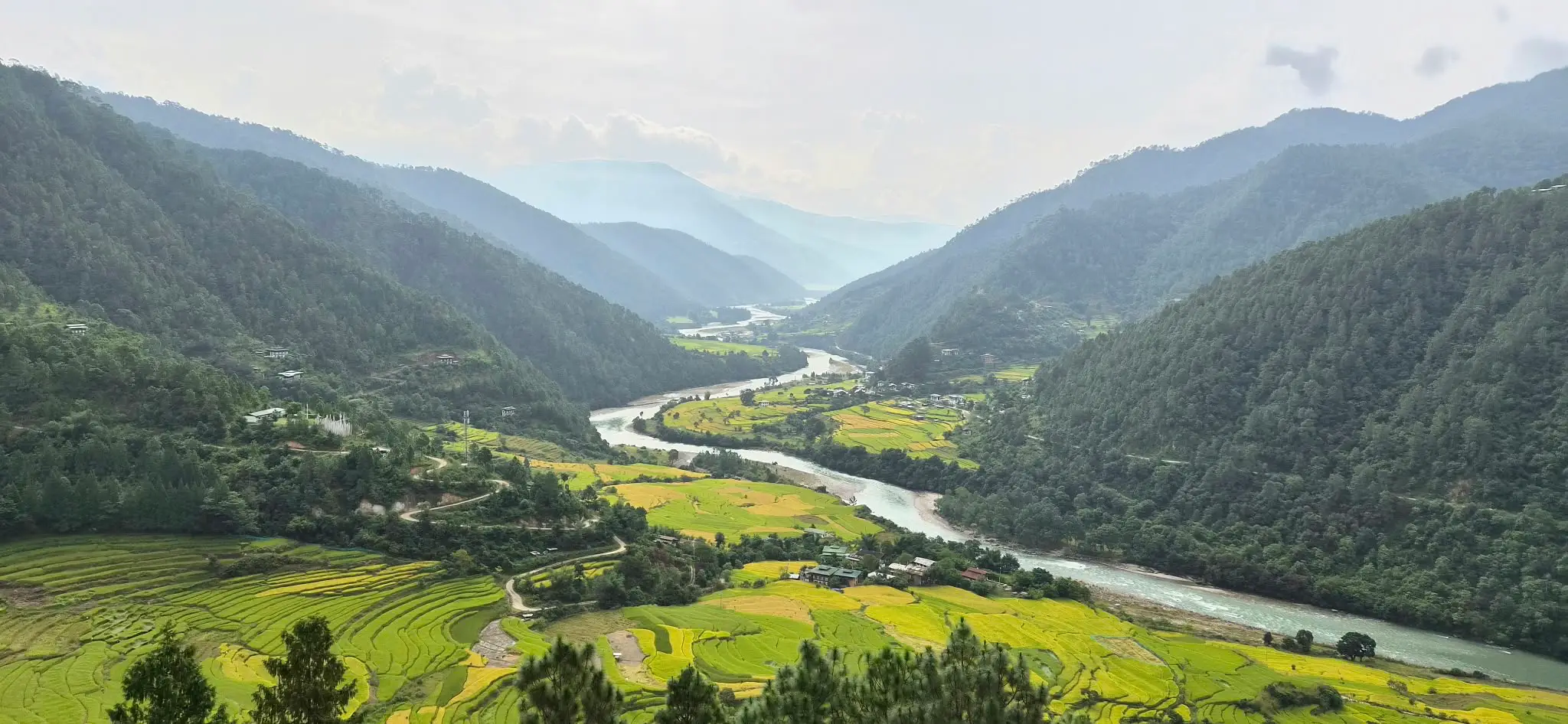
“Should we go to Bhutan or Nepal?” is one of the questions we hear most from guests planning their first Himalayan holiday. The two countries sit side by side on the map, share a Buddhist heritage and the same mighty mountain range, and both offer colourful prayer flags, monasteries and incredible views. But they are very different places to travel. The short answer: choose Bhutan for calm, uncrowded valleys, unique traditions and a carefully protected way of life. Choose Nepal for big-mountain trekking, fascinating cities, wildlife and rich variety on a range of budgets. And if you can, do both.
Written by Holly, Travel Differently’s Bhutan specialist
Last updated 12th October 2026
Our 10 years of experience designing Himalayan trips
They are a one-hour flight apart, and on a clear day you may even see Everest from the plane window.
We have been designing trips to Bhutan for over 10 years, and our Nepal & Bhutan Tour: Himalayan Highlights is one of our most popular journeys. Below, we compare the two countries side by side, so you can work out which one is right for you.
Bhutan vs Nepal at a glance
Here’s how Bhutan and Nepal compare on the things our guests ask about most.
| Bhutan | Nepal | |
| Best for | Calm, culture, hiking for all tastes, iconic lodges | Big-mountain trekking, city buzz, variety, wildlife safari and value |
| Atmosphere | Quiet valleys, fewer travellers, traditions part of daily life | Lively, colourful and busy; temples, markets and lakeside towns |
| Visitor numbers | Deliberately limited through a “high value, low volume” approach | Over 1.15 million visitors last year, about a third in Sept–Nov |
| Tourism fees | Sustainable Development Fee of US$100 per person per day, plus a one-off US$40 visa | Tourist visa required (on arrival or in advance); no daily fee |
| Guides | A guide is required to be with you throughout your trip | Guide or porter required on treks in national parks; free to explore cities independently |
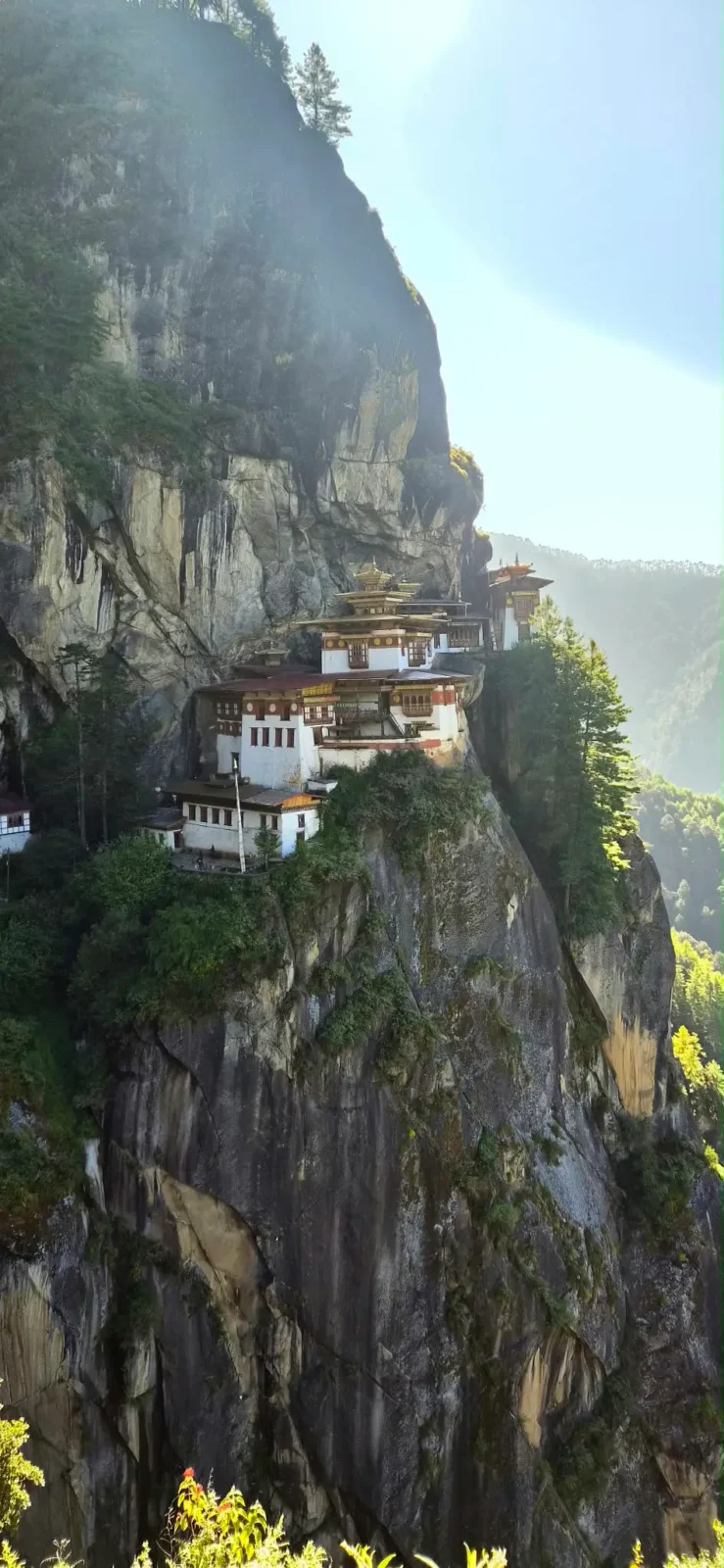
| Signature experience | The hike to Tiger’s Nest Monastery above Paro | Sunrise over the Himalaya from Pokhara or a trek towards Everest or Annapurna |
| Trekking style | Low-key, often camping-based; the Druk Path is a classic 4-day first trek | Famous teahouse routes, from short hill walks to multi-week expeditions |
| Typical Travel Differently trip | Classic Bhutan Holiday: 14 days from £3,903pp | Nepal & Bhutan: Himalayan Highlights: 15 days from £3,889pp |
| Best time to go there | Oct–Nov and Feb–Apr; summer is greener and quieter | Late Sept–Nov after the monsoon, and spring |
| Getting there from the UK | No direct flights; connect via Delhi, Kathmandu, Singapore or Bangkok | No direct flights; connect via a Gulf hub or Delhi |
Culture and atmosphere: stillness or energy?
Bhutan feels like stepping into a living tradition; Nepal feels like stepping into a colouful festival. Both are deeply spiritual, but the way you experience that spirituality is completely different.
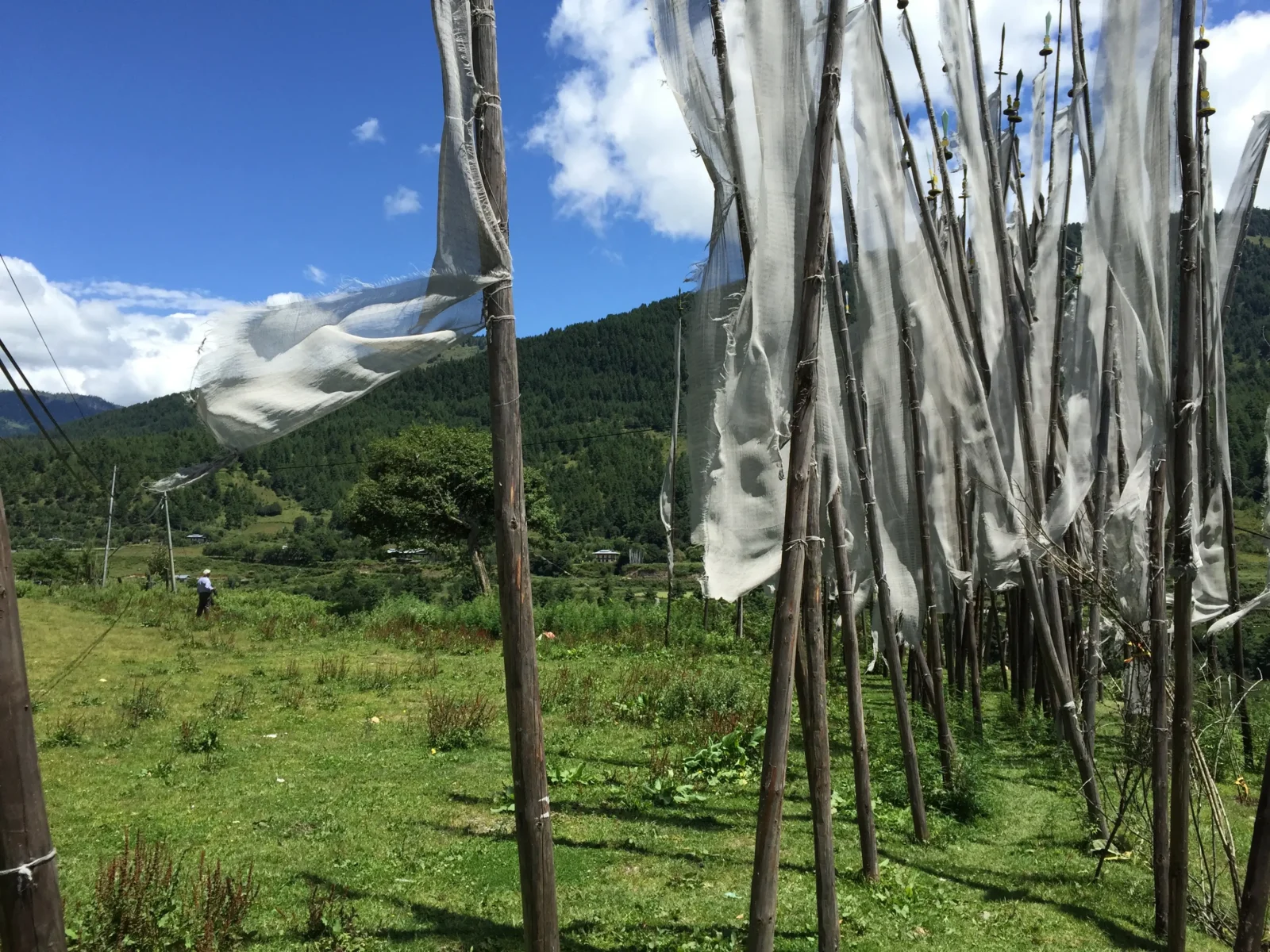
Bhutan: peace, prayer flags and people
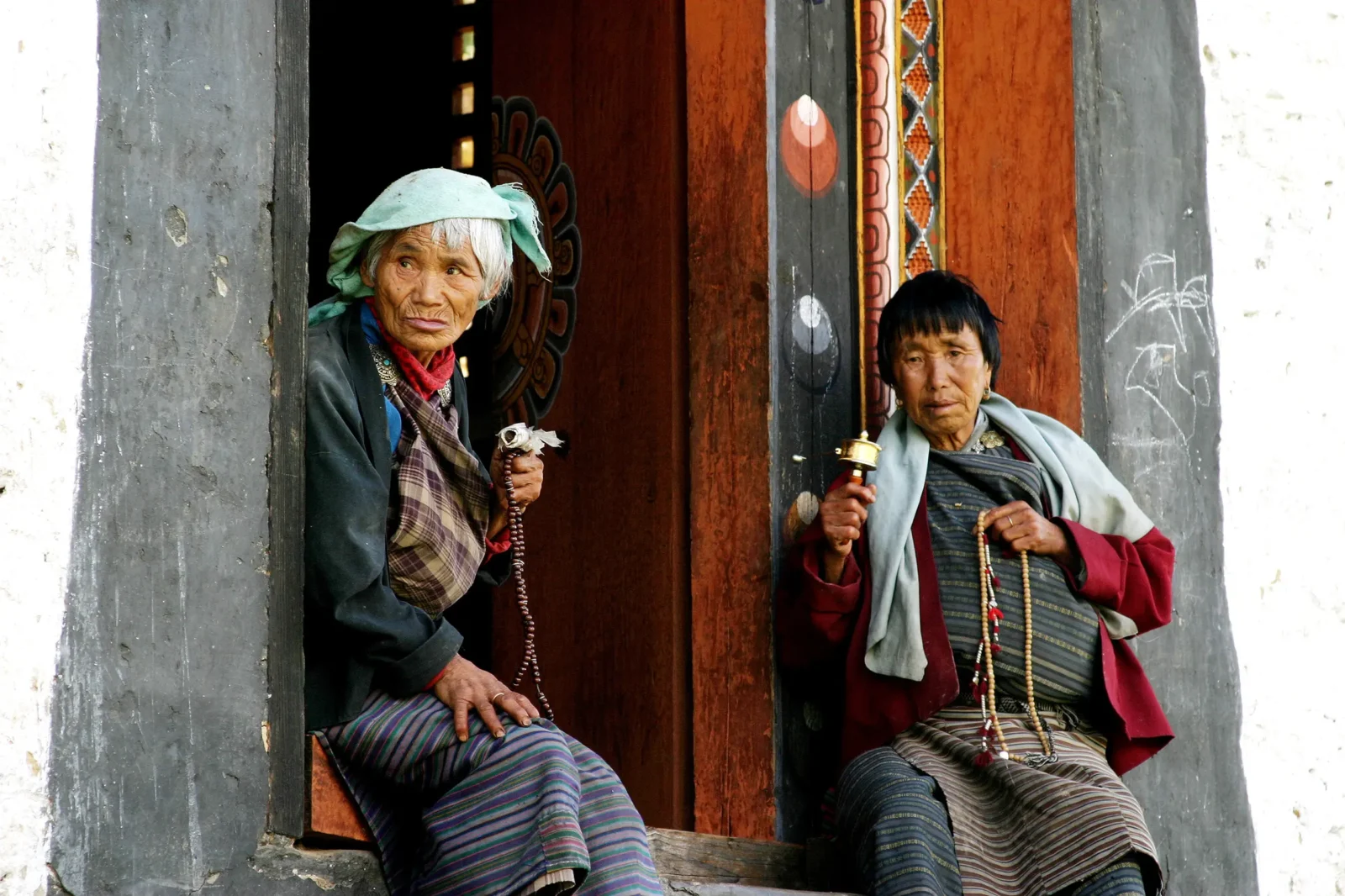
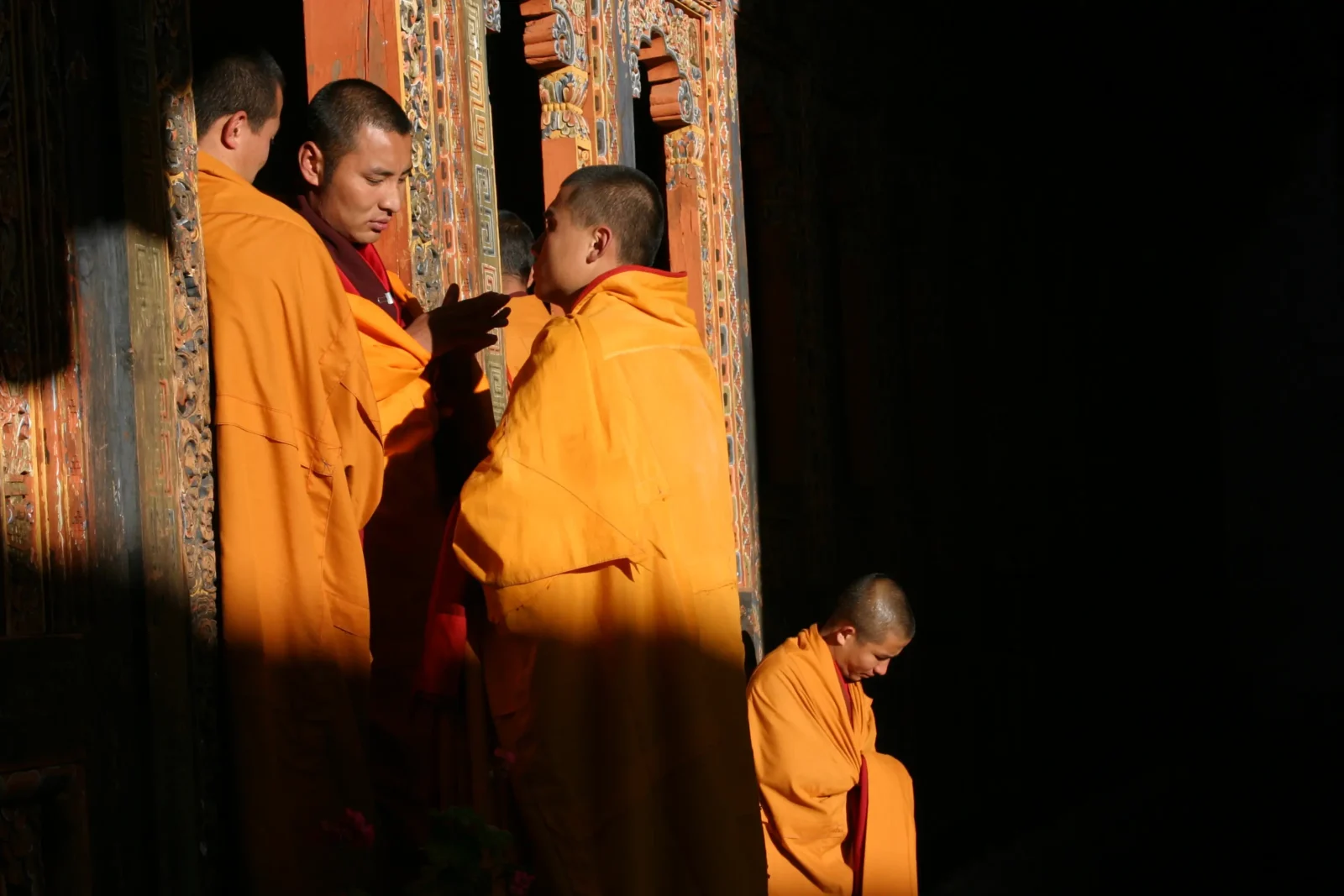
One of the first things you notice in Bhutan is that most people wear national dress every day: the gho for men and the kira for women. Dzongs, monasteries and nunneries are not museum pieces but working places of worship, and your guide may arrange for you to join evening prayers or a butter-lamp blessing at a nunnery.
You typically spend two or three days in each valley, which gives you time to settle in. Our Bhutan expert Holly’s guide, Dorji, took her to his family home to meet his relatives and try butter tea. Moments like that, rather than any single sight, are what our guests remember most.
If you time it right, a Tshechu festival is unforgettable: masked dances, music and whole valleys coming together. The Black-Necked Crane Festival at Gangtey Monastery in November is a favourite. Read more in our guide to the 8 best things to do in Bhutan.
Nepal: temples, markets and lakeside life
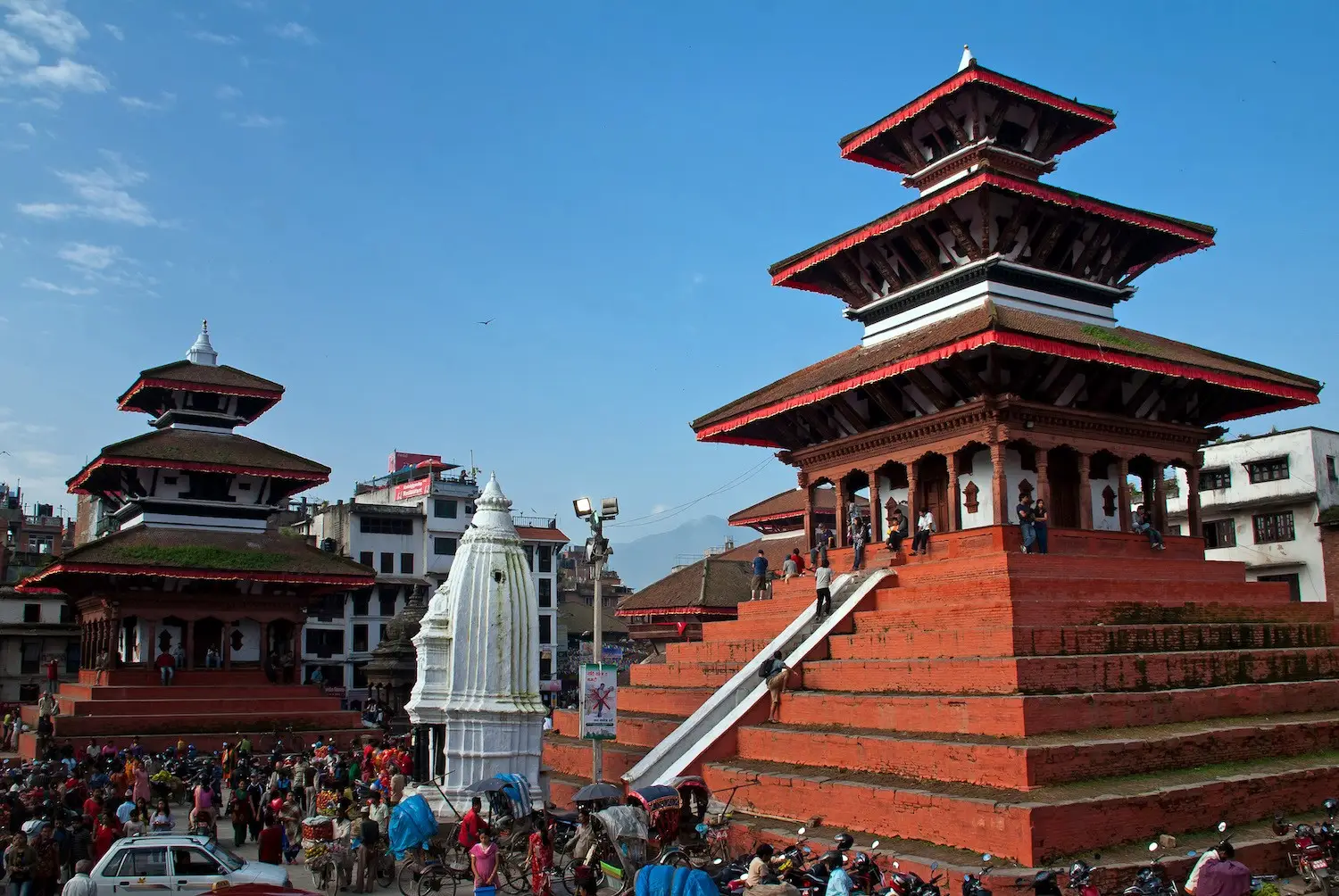
Kathmandu is a sensory feast. With a private guide you can explore Durbar Square, Indra Chowk and Ason Tole, then spend the next day at Pashupatinath, Nepal’s most sacred Hindu temple, and the vast white dome of Boudhanath stupa. Hindu and Buddhist traditions sit side by side, often in the same courtyard. Food here is a real highlight too, we can recommend some places to try delicious Nepali food.
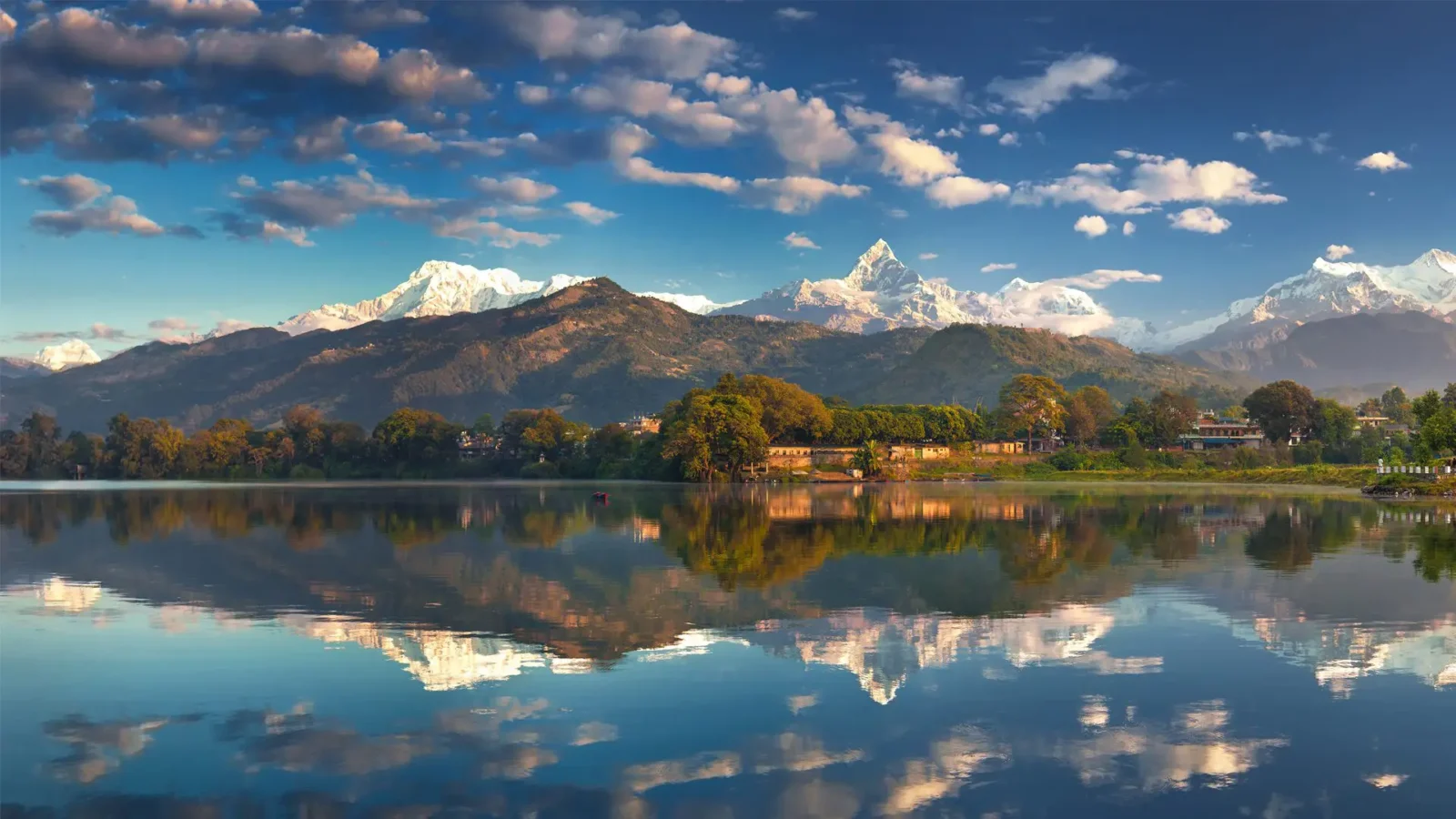
Then there is Pokhara, a laid-back contrast to the capital, with views over Phewa Lake and the hills beyond. It is the perfect place to slow down, take a boat out, browse the markets or set off on a hike.
“If you are lucky with clear skies, look out for views of mighty Mount Everest from the windows of your Kathmandu–Paro flights!” — Holly, Bhutan Specialist
Choose Bhutan if you want quiet, reflective travel and close contact with local life. Choose Nepal if you love colour, bustle and variety. Choose both and you get the full spectrum of Himalayan culture in one trip.
Bhutan vs Nepal for trekking and hiking
Nepal has the world’s most famous trekking routes; Bhutan has some of its quietest. Which is better depends on whether you want the big names or the trail to yourself.
Trekking in Nepal
Nepal is home to eight of the world’s ten highest mountains, and its classic routes, such as Everest Base Camp and the Annapurna region, are legendary. Teahouse trekking means you sleep in simple mountain lodges rather than tents, and there is a route for almost every fitness level and timeframe. The flip side is that the most popular trails can be very busy in peak season.
Nepal now requires all foreign independent trekkers to use a local guide or porter in its national parks and protected areas, according to UK government travel advice. In our opinion, this is excellent: it keeps trekkers safer and keeps more income in mountain communities.
On our Nepal & Bhutan itinerary, Pokhara is your base for day hikes, and we can add a private four- to six-night trek from Pokhara if you want a deeper mountain experience.
Trekking in Bhutan
Trekking in Bhutan is still relatively new, and with far fewer visitors overall, the trails feel wonderfully untouched. Most multi-day treks are fully supported camping journeys with a guide, chef and trekking team, and many routes pass yak herders’ camps and remote villages.
| Bhutan trek | Duration | Difficulty | Why choose it |
| Bumdra Trek | 2 trekking days | Easy / taster | Arrive at Tiger’s Nest from the quieter direction |
| Druk Path Trek | 4 trekking days | Moderate | The classic first trek, between Paro and Thimphu |
| Jomolhari Trek | 6 trekking days | Moderate–challenging | Two nights at Jomolhari Base Camp |
| Trans Bhutan Trail | 6-day sections | Moderate | Hotel-based, no camping |
| Laya Gasa Trek | 11 trekking days | Challenging | Remote villages and Layap culture |
“The Druk Path is the trek I always recommend most to first-timers. You get every classic Bhutan trekking moment, the pine forest, the sacred lake, the high pass, without needing serious mountain experience to enjoy it.” — Holly, Bhutan Specialist
Our verdict: for bucket-list peaks and teahouse trekking, choose Nepal. For peace, culture on the trail and supported camping, choose Bhutan.
Bhutan vs Nepal: which is more expensive?
Day for day, Bhutan costs more, and that is deliberate. Bhutan charges most international visitors a Sustainable Development Fee (SDF) of US$100 per person per day, plus a one-off US$40 visa fee. Nepal has no equivalent daily fee, so your budget stretches further there.
We always tell guests to think of the SDF as more than another holiday expense. It funds Bhutan’s environment, heritage, infrastructure and opportunities for future generations, and it is the reason the country still feels so unspoilt. Really, this model should be adopted by every country that welcomes tourists.
Here is how our current example holidays compare. Every trip is tailor-made, so treat these as starting points:
| Holiday | Duration | From |
| Nepal & Bhutan Tour: Himalayan Highlights | 15 days | £3,889pp |
| Classic Bhutan Holiday | 14 days | £3,903pp |
| Luxury Bhutan Holiday | 11 days | £5,357pp |
| North India & Bhutan | 23 days | £8,143pp |
| Nepal, Bhutan & Rajasthan: A Month from the Himalayas to India | 31 days | £10,926pp |
Notice something? Adding Nepal does not push the price up. Our 15-day Nepal & Bhutan trip starts from a similar price to two weeks in Bhutan alone, because the Nepal days carry no daily fee. It is one of the best-value ways to experience the Himalayas with us.
Our example itineraries include accommodation, private guides and transport, excursions, and the Bhutan visa and SDF. International flights, insurance and tips are separate, though around 80% of our guests ask us to include flights so they have one clear price. For a full breakdown, read how much does a Bhutan holiday cost?
Where to stay: homely guesthouses to world-class lodges
Bhutan has some of the most extraordinary luxury lodges anywhere in Asia; Nepal offers characterful boutique hotels at gentler prices.
Where to stay in Bhutan
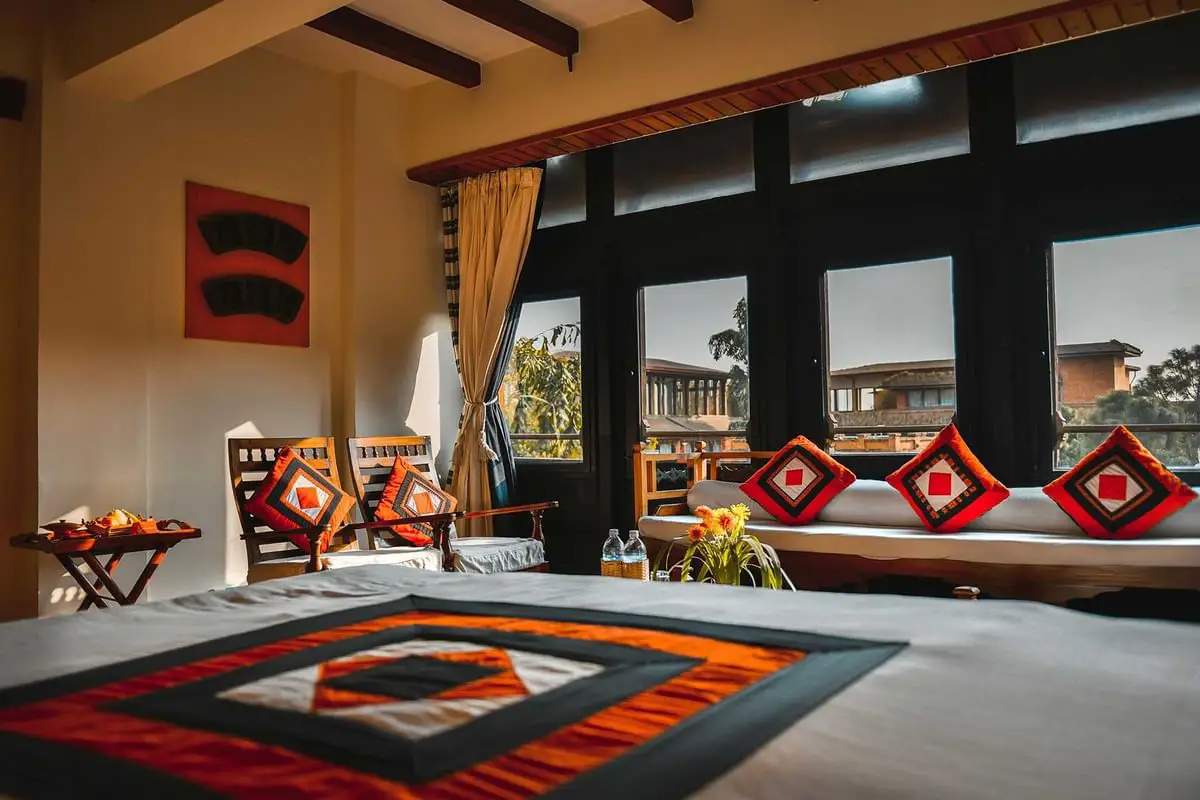
Accommodation in Bhutan falls into two camps: homely, family-run 3-star hotels, and a handful of world-class lodges. Our advice is to enjoy the authentic 3-star stays for most of your trip, then upgrade for a couple of nights where it really counts. When Holly last visited, some of her most memorable stays were in the simpler hotels, chatting to the owners and staff.
For something special, we love:
- Gangtey Lodge in the Phobjikha Valley, featured on the BBC’s Amazing Hotels and Holly’s number one hotel in the world
- COMO Uma Punakha and COMO Uma Paro, among Bhutan’s first luxury hotels and still firm favourites
- Dhensa and the sustainable Dhumra Farm in Punakha
- Amba Paro, the only hotel with direct views of Tiger’s Nest
See our guide to the best hotels and luxury lodges in Bhutan.
Where to stay in Nepal
In Kathmandu we choose comfortable, centrally located hotels so you can walk out into the old city. Our favourites are the gorgeous Inn Patan and, for 5* luxury, Dwarika’s. In Pokhara, one of our favourites is Temple Tree Resort, and on our Nepal & Bhutan tour you stay three nights in a hilltop lodge with lake and mountain views. On a trek you’ll sleep in simple mountain teahouses, which is part of the charm. For exciting wildlife safaris, head to Chitwan or Bardia National Parks and stay in the renowned Tiger Tops lodges.
Best time to visit Bhutan and Nepal
Good news: the best seasons for both countries overlap, which makes combining them easy. October and November bring the clearest Himalayan skies in both, with spring a close second.
| Season | Bhutan | Nepal |
| Oct–Nov | Peak season: clear views, great hiking and famous festivals such as the Black-Necked Crane Festival | Peak trekking season after the monsoon, with crisp mountain views |
| Dec–Jan | Cold nights but bright, crisp, quiet days | Cold at altitude; lower routes and cities still rewarding |
| Feb–Apr | High season; rhododendrons and spring festivals | Excellent spring trekking, with flowering hillsides |
| May | Warmer; a good shoulder month for treks | Warm and increasingly hazy before the rains |
| Jun–Sept | Monsoon: greener, quieter and better value, with daily showers | Monsoon: lush but wet; many trekking routes are less pleasant |
Holly last visited Bhutan in August, just after the rains. The valleys were vivid green and full of flowers, the hotels were quieter, and the Tiger’s Nest trail was far less busy than in peak months. Bring a raincoat and summer can be a lovely, lower-cost time to go.
Festival dates book up fast, so if you’d like to coincide with a Tshechu, we recommend planning around a year ahead.
Is it safe to travel to Nepal after the 2026 floods?
Yes, the areas we visit are open and operating normally, and travelling responsibly is one of the most meaningful ways to support Nepal’s recovery. But first, it is important to acknowledge what happened.
What happened
On 26 August 2026, part of a glacier near Langtang Lirung collapsed, sending a devastating flash flood down the Bhote Koshi and Trishuli river valleys in Rasuwa and Nuwakot districts, north of Kathmandu. More than 900 people lost their lives in Nepal, thousands more are missing, and whole communities, roads, bridges and hydropower plants were destroyed (Wikipedia summary of official figures). Our thoughts are with everyone who lost loved ones, homes and livelihoods.
Where is affected, and where isn’t
The damage was concentrated in a specific corridor: the Bhote Koshi–Trishuli valleys in Rasuwa and Nuwakot, including the Langtang approach and the Rasuwagadhi border crossing into Tibet. Large parts of Nepal were untouched and continue to operate as normal, as Nepal’s tourism stakeholders have stressed (Spotlight Nepal). That includes the places on our itineraries: Kathmandu’s temples and markets, and Pokhara beneath the Annapurnas.
We stay in close contact with our local partners on the ground and review every itinerary against the latest UK government travel advice before you travel. Where roads have been affected, we choose the safest route, which may mean a short domestic flight rather than a road transfer to Pokhara. We are not currently including treks in the Langtang region.
Why your visit matters now
The floods struck just as Nepal’s busiest season was beginning. Tourism makes up nearly 8% of Nepal’s economy and employs more than a million people, and almost a third of visitors usually arrive between September and November (Al Jazeera). Since the disaster, cancellations have hit guides, drivers, porters, hotel staff and families far from the flood zone, and the Nepal Tourism Board estimates tourism losses of around Rs 52 billion.
As a responsible tour operator, we believe it is our job to help get tourism moving again, safely and respectfully. A Himalayan holiday that stays away from Nepal does nothing for the guide in Kathmandu or the lodge owner in Pokhara whose bookings have disappeared. Thoughtful travel, with local guides, locally owned hotels and money spent in local businesses, is one of the most direct ways to support recovery.
This is what responsible travel means to us: personally designed, locally rooted, and delivered with partners who genuinely care about the places they call home.
If you’d like to help further, consider a donation to a recognised relief organisation working in the affected districts, and ask your guide about local initiatives during your trip. We’re happy to point you in the right direction.
Why not both? Combining Nepal and Bhutan
For most first-time Himalayan travellers, our honest answer to “Bhutan or Nepal?” is: both. Kathmandu is one of the main gateways to Paro, the flight takes around an hour, and the two countries complement each other perfectly: Nepal’s energy first, then Bhutan’s calm.
Nepal & Bhutan Tour: Himalayan Highlights (15 days from £3,889pp)
Our Nepal & Bhutan Tour is designed to give you the best of both in just over two weeks:
- Days 1–2, Kathmandu: Durbar Square, Pashupatinath and Boudhanath with your private guide
- Days 3–5, Pokhara: three nights in a hilltop lodge above Phewa Lake, with hikes, boat trips and an optional private trek
- Day 6, Kathmandu: a final night before flying to Bhutan
- Days 7–8, Thimphu: Buddha Dordenma, the farmers’ market and the Royal Textile Academy
- Days 9–10, Punakha: Dochu La Pass, Punakha Dzong, rafting and a nunnery blessing
- Days 11–12, Gangtey: evening prayers, the Gangtey Nature Trail and the Black-Necked Crane Centre
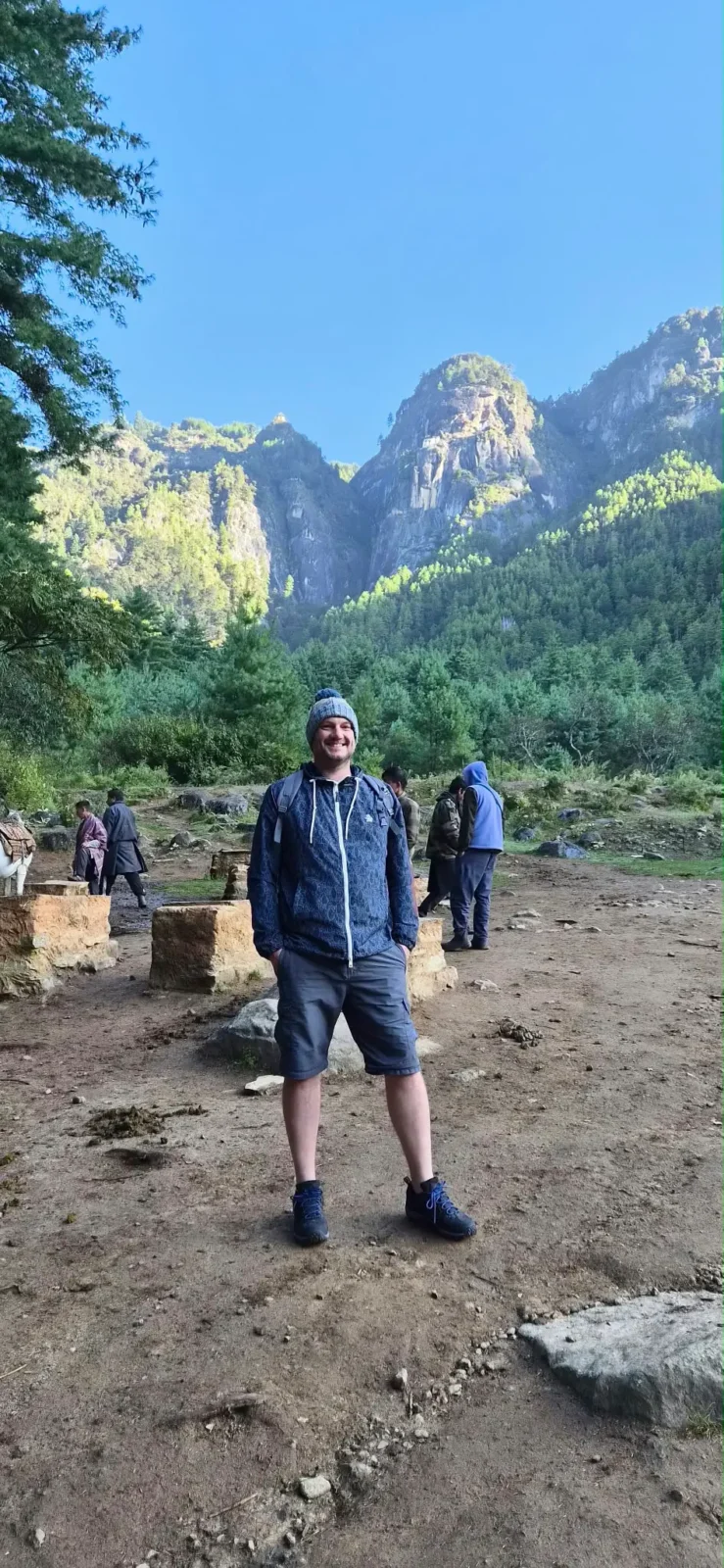
- Days 13–14, Paro: a farmhouse visit and the unforgettable hike to Tiger’s Nest
- Day 15: fly back to Kathmandu, watching for Everest from the window
The price includes accommodation, private guides, transport, excursions, and your Bhutan visa and daily SDF. Want more luxury? Ask about upgrading to Gangtey Lodge.
Got longer? A month from the Himalayas to India (31 days from £10,926pp)
For a sabbatical, retirement trip or once-in-a-lifetime journey, our Nepal, Bhutan & Rajasthan itinerary follows the same Nepal and Bhutan route, then continues to India for the Taj Mahal, tigers in Ranthambore, leopards in Jawai and the palaces of Jaipur, Jodhpur and Udaipur.
“This is our longest trip to the India Subcontinent. Take the time to soak up the quieter calmer moments with a good book, or cold G&T.” — Holly, India and Bhutan Expert
Prefer to focus on one country? Explore all our Bhutan holidays, from the Classic Bhutan Holiday to Slow Travel Bhutan Beyond the Highlights.
Frequently asked questions
Neither is better; they suit different travellers. Bhutan is best for calm, culture and uncrowded hiking. Nepal is best for classic Himalayan trekking, lively cities and value. Many of our guests combine both on our 15-day Nepal & Bhutan tour.
Yes. Bhutan charges most visitors a Sustainable Development Fee of US$100 per person per day, plus a US$40 visa fee, while Nepal has no daily fee. Our Nepal & Bhutan tour starts from £3,889pp for 15 days, a similar price to two weeks in Bhutan alone.
Yes, easily. Flights connect Kathmandu and Paro in around an hour, and the best seasons for both overlap. Two weeks is enough to see the highlights of each.
We recommend at least 15 days: around six in Nepal (Kathmandu and Pokhara) and eight in Bhutan (Thimphu, Punakha, Gangtey and Paro). With a month, you can add Rajasthan in India.
Nepal has the world’s most famous treks, such as Everest Base Camp and the Annapurna region. Bhutan’s treks, such as the Druk Path and Jomolhari, are far quieter. Choose Nepal for iconic peaks and Bhutan for solitude.
The floods affected a specific corridor in Rasuwa and Nuwakot districts, north of Kathmandu. Kathmandu, Pokhara and Nepal’s main tourism regions are open and operating normally. We review every trip against current UK government travel advice and our partners’ on-the-ground updates.
October and November offer the clearest mountain views in both countries. February to April is another excellent window. June to September is monsoon season.
In Bhutan, visitors travel with a licensed local guide. In Nepal, trekkers in national parks and protected areas must use a local guide or porter. All our holidays include private guides throughout.
So, Bhutan or Nepal?
If you crave stillness, living traditions and trails you’ll share with almost no one, choose Bhutan. If you want iconic peaks, colourful cities and more flexibility on budget, choose Nepal. And if you want the full Himalayan story, from Kathmandu’s temples to Tiger’s Nest, choose both.
At Travel Differently, every holiday is 100% tailor-made around your interests, pace and budget. We work with trusted local guides and hand-picked, locally rooted partners, so your trip supports the communities you visit, and right now that matters more than ever in Nepal.
Speak to our Himalaya experts, Holly and Sam, or call +44 (0)203 9099 573, and we’ll help you work out your perfect trip.
Why Book With Travel Differently
Passionate and experienced
- Each member of the team has over a decade of experience in the industry
- Our 5* client reviews reflect our service & standards
- We are a fully independent & owner-run tour operator
- Our holidays include full financial protection & ATOL coverage
- We are destination experts, ensuring authentic & reliable advice
Committed and Responsible
Tailor-made and Personal
- No two trips are the same, our holidays are 100% bespoke
- We design personal, genuine cultural connections & experiences
- From planning to travel, you’ll have one dedicated point of contact
- Our support is available around the clock during your holiday
- We take care of the details, so you don’t have to